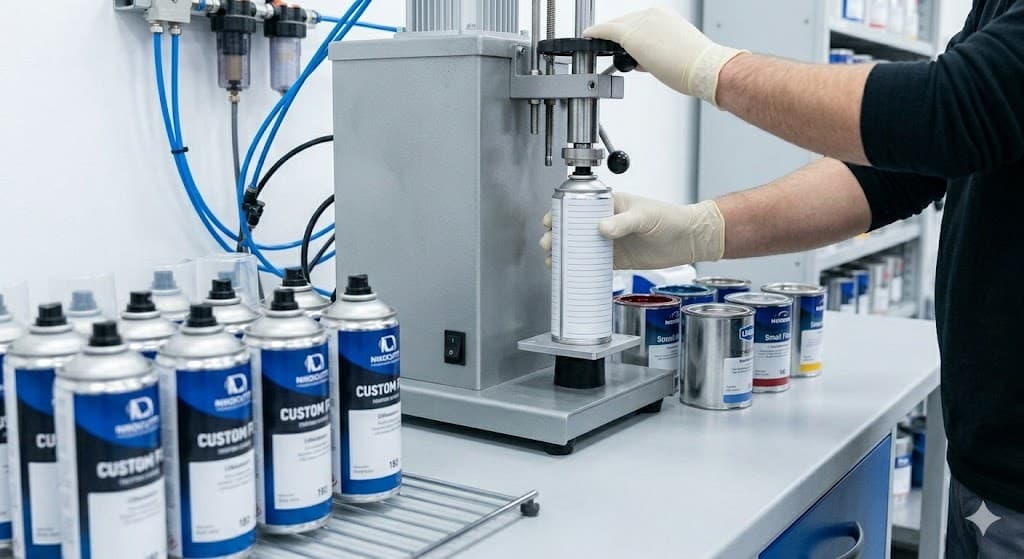
How the mix and fill works at the counter.
A filled custom can is a different object from a factory rattle can. The can on this counter arrives already charged with propellant, and the paint goes in afterwards as a single measured shot pushed into the pressurised body. That is the whole reason a counter can produce a colour nobody has ever asked for before: the pressurised container is the stock item, and only what goes into it changes.
In practice it means the can decides nothing. The mix is made to the formula the match produced, and it is that mix that goes into the can. Nothing gets approximated at the can itself, which is exactly the step where colour goes wrong on a shelf product.
What the fill needs from you.
The fill copies a formula and cannot improve one, so the colour has to be settled before a can is touched. Bring the code if you have it, and bring the object itself if the job allows it. If the reference on your job sheet is an AS 2700 number rather than a vehicle code, bring that and a physical sample together and ask what the counter can work from.
The can then has to be brought back into one liquid. Paint driven into propellant sits in layers, so shake it before you spray, longer and harder than feels necessary. Put a test spray on a card first. It tells you the can is atomising evenly, and it gives you something to hold against the panel in daylight before the colour is on the work.